
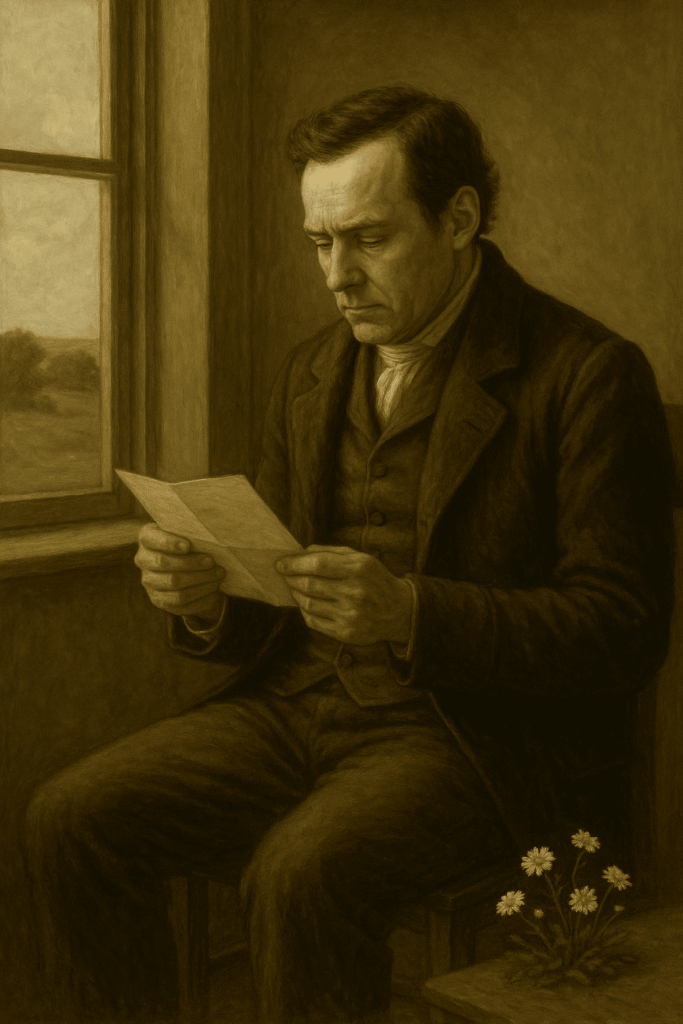
Imagine, for a moment, a time when patience and waiting were not extraordinary virtues but the default settings of daily life—expected behaviors, even survival skills. Waiting months on end in a perpetual state of uncertainty was routine, and not knowing was simply part of the human condition. For most of our history—right up until Samuel Morse jolted the world awake with the electric telegraph—we lived at the mercy of distance. Communication moved at the speed of wind, weather, and pure luck. In the 19th century, for example, a letter from Australia or Tasmania to England could take four to six months to arrive—and that was if the universe felt cooperative.
This physical distance naturally created emotional and communicative distance. The slow emotional metabolism it produced is worth a pause, especially when modern life feels hyper-accelerated, almost grotesquely so. Yes, the slow communication of the 19th century had its absurdities—its bureaucratic bungles, hilarious misunderstandings, and occasionally tragic oversights—but its very slowness shaped people’s minds. It bred a certain stoicism, perhaps even a touch of fatalism. After all, what else could one do but wait and accept?
The contrast between 19th-century patience and our 21st-century speed culture gives us a glimpse into how people of each era learned to think and feel. Two centuries ago, patience was baked into communication, and long silences were not immediately interpreted as neglect or passive-aggression. Today, a delayed response can spark anxiety, irritation, or the creeping suspicion that one is being ghosted. And when waiting weeks or months for news of a loved one was standard practice, the resulting letter naturally carried weight—long, considered, reflective, often drifting into the poetic or philosophical simply because time allowed (and required) it.
Now, messages appear as texts, emojis, and hastily composed emails—short, rapid, and fundamentally transactional. By contrast, letters that took weeks or months to arrive were read with the attention they deserved. A 19th-century recipient would likely set aside quiet, uninterrupted time to absorb the words on the page, treating the letter as a kind of umbilical cord between writer and reader, its presence tangible and assured. Today, a written message fights for survival as it sinks beneath piles of notifications, digital feeds, and multitasking. It becomes ephemeral—glanced at, perhaps acknowledged, rarely savored.
Understanding the rhythms of 19th-century communication while living in hyper-accelerated times reminds us that a slow reply is not disrespect; that thinking before responding can feel like a gift; and that contact need not be constant to be meaningful. More than that, in a world organized around speed, choosing slower modes of communication—longer messages, reflective pauses, scheduled replies—becomes not only countercultural, but almost a political act.