
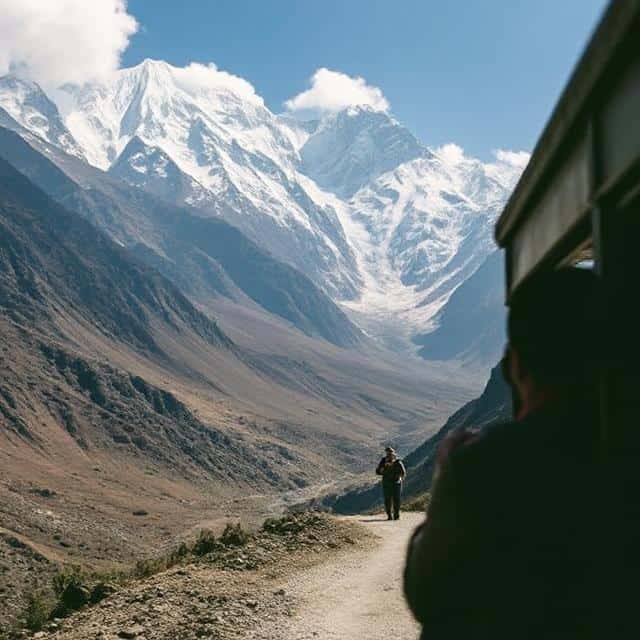
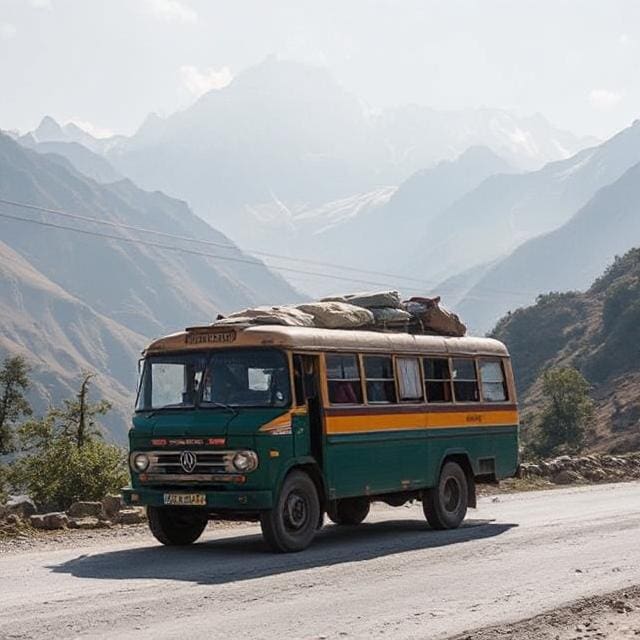
Way back in 1995, during my harebrained days, I — along with a motley crew of naive backpackers — clambered onto the top of a rickety old bus rattling its way out of Kathmandu, bound for Besisahar, where we would begin hiking the Annapurna Circuit.
A quick Google search will tell you everything you need to know about this epic Himalayan trail. In short: the trek stretches around 230 km from Besisahar to Pokhara and takes the average walker roughly 21 days to complete. The highest point, Thorong La Pass, towers at a breathtaking 5,416 meters, marking the midpoint of the journey. Along the way, you marvel at endless mountain peaks, cross an absurd number of shaky suspension bridges, and wander through valley after vast valley before stumbling into a tiny hamlet offering a warm bed and a hot meal.
Contrary to what you might be thinking, my adventure on the Annapurna Circuit was as far from a Slow Travel experience as an industrial farming complex is from a family-run farmstead. Here’s why: the hiking plan was (in my mind) non-negotiable; walking more and stopping less was the daily mantra; and the mind was stuffed with objectives, distances, deadlines — and little else.
Thankfully, the trail had other plans for me. Enter Michael, a 21-year-old student from San Francisco. If anyone embodied the spirit of Slow Travel, it was him. He had few fixed plans and welcomed serendipity like an old friend. His travel ethos was built on simplicity and mindfulness. His mantra? “Doing less, more deliberately.” Michael immersed himself in the local language, the culture, and the small, unnoticed rhythms of life. For him, speed, distance, days, and time were irrelevant details.
What he made of the crowds of demented backpackers scrambling out of bed at the crack of dawn to chase yet another day’s march remains a mystery. Michael was content to travel slowly, in his offbeat way, absorbing more than he consumed, doing less but doing it deeply and authentically.
While our meeting was brief, the lessons linger still, and remind me that Slow Travel had always been a thing, long before it became a Thing.
Of course, Slow Travel looks different to everyone. But certain elements seem to weave through all true experiences of it — consciousness, connection, immersion, authenticity, exploration, and deliberate action.
Understand these, and you’ll find that even the shortest stroll through your own city can become a Slow Travel experience. A lingering conversation with a shopkeeper, a quiet hour spent in a sun-drenched café, an aimless wander down a street you’ve never noticed — all acts of slowness, and all windows into a richer, more deliberate way of moving through the world. Interested in Slow Travel resources (books, videos, organizations, and more), then head to the Slow Travel resource page.