

As an enthusiastic long-distance walker and voyager, I have come to recognize the similarities that can be found between a child’s education experience and that of a long journey. A child’s education experience is, in many ways, comparable to that of someone undertaking a pilgrimage, in that it presents an opportunity for a potentially transformative experience for the person involved. Much like a long journey, a child’s education experience will be challenging and not without a degree of risk and moments of disappointment; however, one would hope it would also be meaningful and of value to future life experiences.
What is more, we can venture that, much like a person who undertakes a long journey, the educational journey of a child will be twofold: exterior and interior. That is to say that the exterior or physical learning environment of the school space works in duality with the interior learning environment that is the child’s mind.
The exterior learning environment of an accelerated or fast-paced classroom will typically see the teacher trying to implement the content curriculum by maximizing the number of learning situations and moving rapidly and efficiently through the course content. Concurrently, the child’s mind works frantically to keep pace, decipher and process knowledge and produce outcomes under pressure of the temporal regime that pervades such a learning environment. Conversely, we can envisage a slower more deliberate exterior learning environment – the Slow classroom – where a child is invited by the teacher to connect and interact differently with the course content at hand; he or she is permitted the luxury to observe, encode, decode, question, contemplate and apply the content at a tempo more fitting to the student’s own natural inner learning rhythm. In such an environment, slowness in learning is given the rightful place it deserves.
The temporal boundaries and limitations that pervade what I characterize as the Slow and Fast classrooms are as distinctive as they are different, and, as a consequence, generate vastly different learning experiences and thus, educational journeys for the child.
This is epitomized most markedly in Fast Education’s assembly line thinking, orientation towards results and grades, and its reinforcement of conformity and competition, a model borrowed from business and industry, particularly Fordism, that made its way into education by way of the social efficiency movement in curriculum studies in the early part of the 1900s.
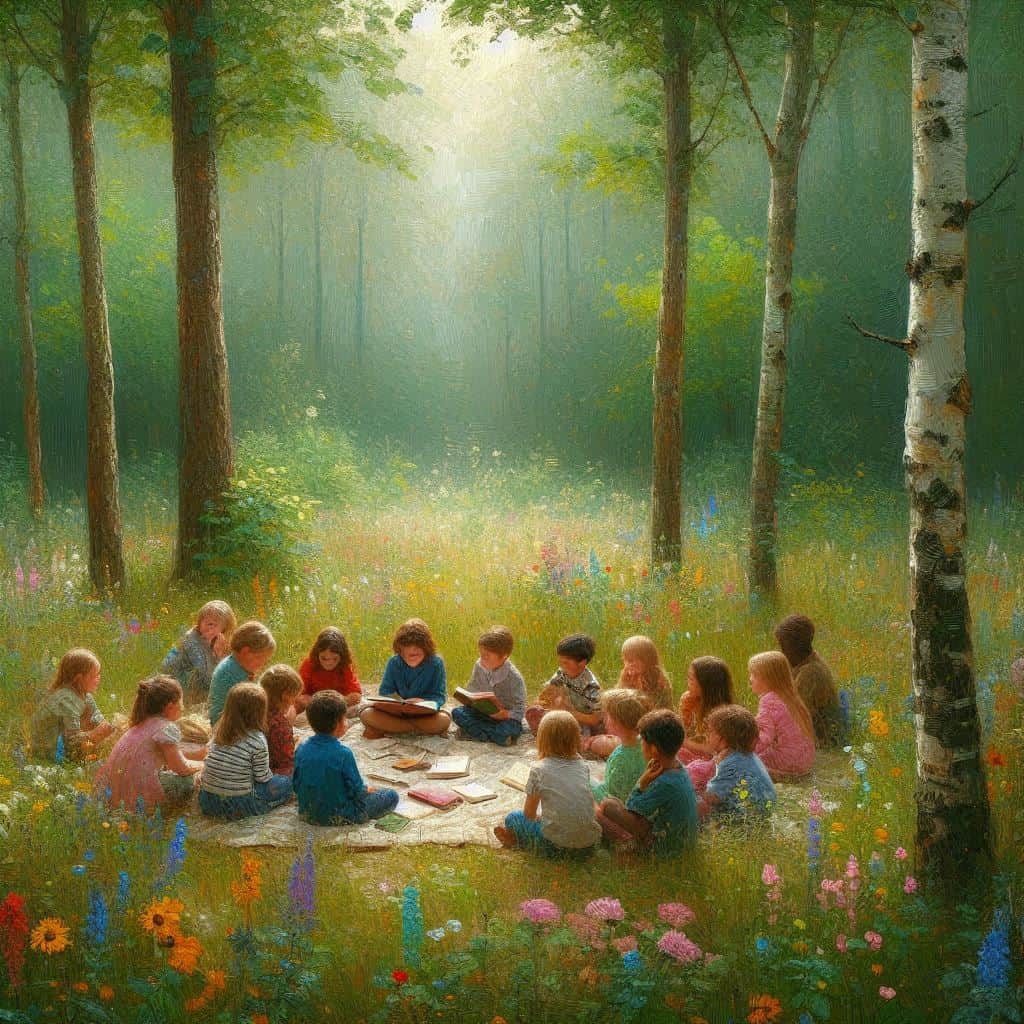
Conversely, Slow education, which has materialized precisely in response to the accelerated, predictable, and pragmatic rhythms of Fast education, conjures an altogether different image. Fundamentally, it recognizes the indispensability of non-cognitive human traits and abilities such as curiosity, interpersonal skills and grit, and understands that a child’s natural rhythm of learning is paramount to both their sustained wellbeing and happiness and enhanced academic attainment.
Today’s education landscape is increasingly complicated and political. Factors such as curriculum overload, teaching to the test, and the push-down classroom accelerate teaching-learning approaches, suggesting that speed is a symptom of education policymaking. While the essence of learning anything well lies in the trials, challenges and obstacles that one needs to face and overcome, learning well under the devices of speed and time controls is simply unfeasible for many students. Put plainly, not all students are fast students, and not all children learn well in the fast classroom.
If you are interested in knowing more about Slow Education, head to the Slow Education resource page.