
Much like many people living in North America, I have a complex relationship with speed. On the one hand, I profit enormously from the extraordinary benefits that speed provides in the form of fast transit systems and high-speed Internet connections; yet, on the other hand, I am frequently at odds with what appears to be the blind compulsion that everything fast is efficient and must, therefore, be good. Put simply, not all things fast are good, a point Canadian journalist Carl Honoré must have had in mind when he sagely explained that “some things cannot, should not, be sped up. They take time; they need slowness.” This pearl of wisdom is of course open to interpretation and circumstance. Take writing, for instance. For some people, writing can be a deeply reflective undertaking that requires slowness to arrive at the best results, while for others writing at speed or under pressure of a deadline can yield the same. Similar thinking applies to a multitude of everyday activities from walking to eating and cooking to driving. In a sense, like most people, I can be both Hare and Tortoise in my daily life; but, most importantly, I try to stay mindful about why I am going fast or slow.
With this ethos in mind, and to honour Honoré, The Slow Human has compiled a list of five things that take time and cannot, should not, be sped up.
Parenting – Of all life’s journeys, parenting is at once intensely demanding and deeply rewarding. It’s a path that requires deliberate slowness—patience, care, guidance, support, affection, understanding, and empathy. In many ways, it resembles the timeless image of a salmon swimming upstream, pushing forward against a powerful current. On this journey, forget efficiency, predictability, and speed—if your goal is to build strong bonds, nurture emotional well-being, and prepare your child for the world that awaits.

Writing – The process of researching and writing my Master’s thesis on Slow Education unfolded over three long, meandering years. As with any creative expedition of such scale, there were moments when my imagination felt parched and my enthusiasm nearly packed its bags. But oh, the rewards—rich, surprising, and well worth the uphill climb. Beyond deepening my understanding of education policy and curriculum, I emerged a more agile thinker and a more precise writer. I also learned to poke gently but persistently at my own assumptions, unearthing biases I hadn’t realized I carried.
In short, the act of writing and thinking became a mirror, a magnifying glass, and occasionally, a delightful maze. In a world tilting ever faster toward ChatGPT enthusiasm—where writing, and thus thinking, risk becoming quaint pastimes—I still cherish the slow burn of crafting my own thoughts. Writing takes time. It asks for patience. And like a fine pot of tea, it simply shouldn’t be rushed.
Grieving – Grieving is a deeply personal journey—without a map, a compass, or a standard timeline. Yet Western society has tried to contain it, packaging time into fixed units and assigning deadlines to even the rawest of emotions. This tendency, known as temporal imperialism—the imposition of rigid, unfamiliar time standards onto a culture—has eroded the space once reserved for grief rituals and traditions.
As Indian activist Satish Kumar puts it, “It is a Western disease to make time finite, and then impose speed on all aspects of life.” In today’s race-against-the-clock culture, even mourning is timed. The period allowed for grief—especially for employees—is narrow, rigid, and governed by policy rather than compassion. Grieving, simply put, needs time and cannot, should not, be sped up.
Fermenting– What do bread, cheese, wine, beer, kimchi, and sauerkraut have in common? All are the products of fermentation—an ancient, transformative process that not only elevates flavour and texture, but enhances nutritional value. Strip away time and tradition, however, and you’re left with something far less compelling. Think POM bread, Kraft singles, Budweiser beer: staples of the industrial food era, standard issue for many North Americans, and yet pale imitations of their slow-fermented ancestors. Convenience may have its place, but when it comes to depth of flavour and a genuinely sensory experience, the case for going slow is hard to ignore.
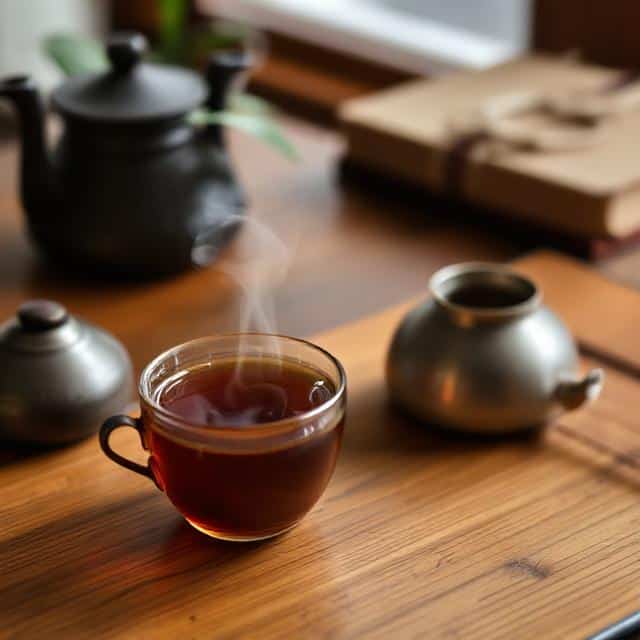
Making Tea – For much of the world, tea isn’t just a beverage—it’s a way of life. In China, India, and the United Kingdom, tea culture runs deep, steeped in ritual and reverence. Like the slow, deliberate art of its cultivation, the preparation of tea is not something to be rushed. Nowhere is this philosophy more pronounced than in Japan, where the tea ceremony is a quietly powerful ritual—a meditative choreography that reflects the very soul of the culture: harmony, respect, tranquility. By contrast, the act of dunking a teabag into boiling water, dousing it with milk, and shoveling in sugar may be convenient, but to purists, it borders on sacrilege—not just to the leaf, but to the spirit of the drinker.